
Teeth Whitening
Teeth whitening must be done correctly, otherwise it can damage the enamel.
Discover the difference between professional whitening and risky home methods.
Recommendations by Mr Dent Clinic, Chișinău.
Why do people want whiter teeth?
A bright smile conveys health, care, and confidence.
Unfortunately, enamel naturally becomes stained over time due to pigmented foods, coffee, tea, red wine, smoking, or simply aging.
Teeth whitening is one of the fastest and most effective ways to refresh a smile — but not all methods are safe.
Professional in-office whitening — the safest method
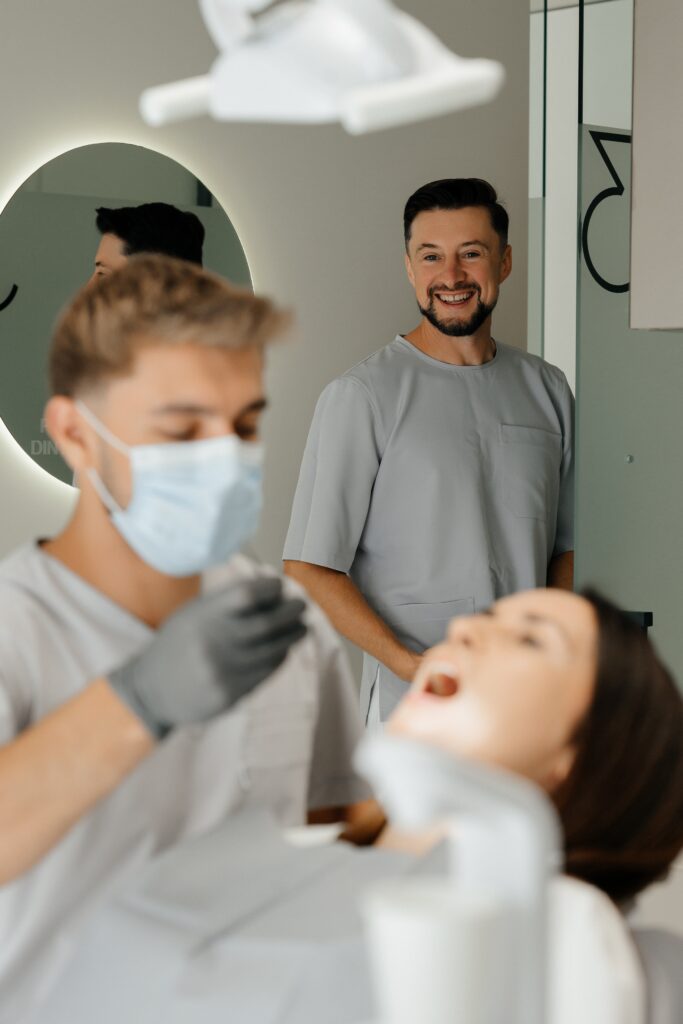
At the dentist, under medical supervision, whitening gels with controlled peroxide concentrations are used along with protective systems for gums and enamel.
These are activated with a special lamp in short sessions.
Benefits of in-office whitening:
- immediate visible results in 60–90 minutes
- gum protection with special barriers
- medical evaluation before the procedure
- sensitivity control
- does not damage enamel structure
Everything begins with an evaluation of gum health and a professional cleaning for even results.
Popular at-home methods — high risks hidden behind quick promises
The internet is full of “cheap and natural” solutions, aggressively promoted on social media.
What people don’t know is that most of them can cause irreversible enamel damage.
What is risky and why?
- Baking soda – scratches enamel and thins it over time
- Lemon juice / vinegar – acidic erosion that destroys enamel deeply
- Whitening strips without medical guidance – severe sensitivity, gum inflammation
- Activated charcoal – abrasive, can create invisible microcracks
The problem with these methods: they remove the protective enamel while only creating the illusion of whitening.
Result? More sensitivity, thinner enamel, and higher cavity risk.
When is teeth whitening NOT recommended?
Whitening is postponed until the following are treated:
- active cavities
- gingivitis or periodontitis
- very thin enamel
- patients with severe sensitivity
Also, pregnant or breastfeeding patients should avoid whitening — the procedure is delayed.