Bone grafting is an essential procedure when the bone is no longer sufficient to support a dental implant.
Find out when it is indicated, how it works, and what results it guarantees at Mr Dent Clinic, Chișinău.
Why do we lose jawbone?
After losing a tooth, the surrounding bone begins to shrink.
There is no longer natural stimulation during chewing, so the body “decides” the bone is no longer needed.
This process is called bone resorption and can start just a few months after extraction.
Other common causes:
- periodontal disease (periodontitis)
- dentoalveolar trauma
- untreated infections
- long-term use of removable dentures
The longer the wait, the thinner the bone becomes — making a dental implant unstable.
What is bone grafting?
Bone grafting is the procedure through which lost bone volume is rebuilt.
Bone material is added to the deficient area, and the body gradually integrates it, forming new, strong, healthy bone — enough to support a dental implant long-term.
It is a safe procedure, performed under local anesthesia, using modern techniques and biocompatible materials.
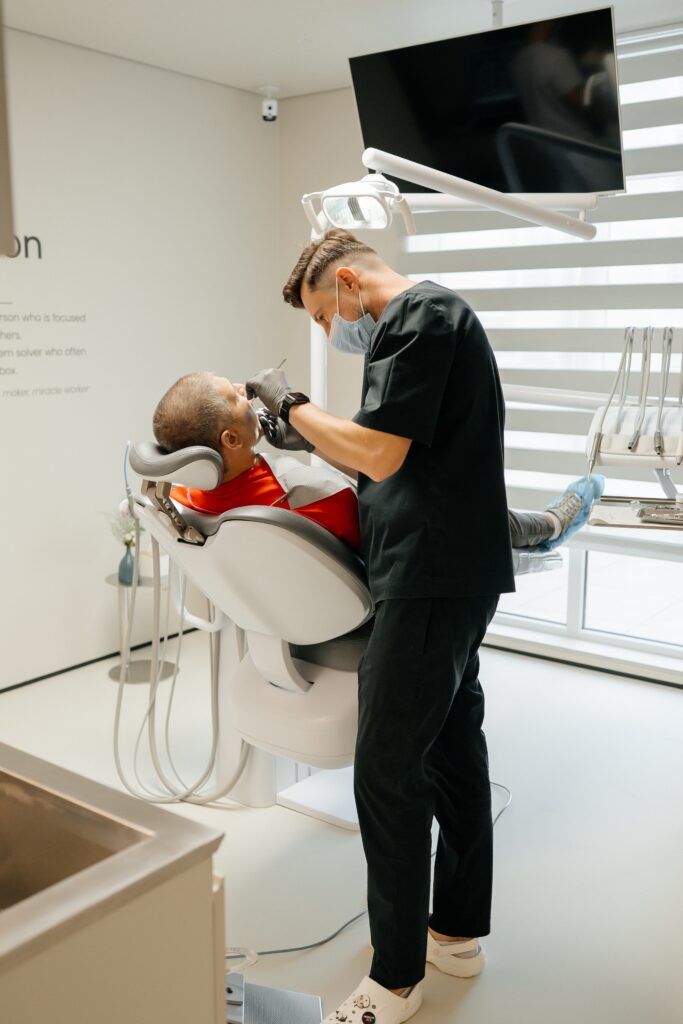

When is bone grafting necessary?
Your doctor will recommend this procedure when the existing bone does not have the required minimum height or width for an implant.
Typical situations:
- old extraction with significant bone loss
- advanced periodontitis
- bone defects after infections
- missing teeth in the front area, where aesthetics matter
- low-positioned sinus (upper molar area)
Without bone grafting, the implant would be unstable → high risk of failure.
Types of bone grafting (explained simply)
Depending on each patient’s anatomy, several methods exist:
- Bone grafting – adding bone material to the affected area
- Sinus lift – lifting the sinus membrane to create space for implants in the upper molar region
- Guided bone regeneration – using special membranes to stimulate bone reconstruction
The choice is made based on CT scan (CBCT) and 3D planning.
Does the procedure hurt?
The surgery is performed under local anesthesia.
The patient feels only slight vibration and pressure — no real pain.
Recovery is similar to that after a tooth extraction.
The doctor prescribes anti-inflammatory medication and simple aftercare instructions.
Most patients say they expected something more difficult — reality is much easier than the myths.
How long does the process take?
After bone grafting, the body needs 4–6 months to fully form new bone.
Then the implant can be placed.
In some cases, if conditions allow, the implant can be placed at the same time as the bone graft — reducing overall treatment time.
What results does bone grafting offer?
- stable, healthy bone for long-term implant success
- restoration of natural facial aesthetics and gum contour
- prevention of lip collapse and premature facial aging
- normal chewing and improved speech comfort
Practically, bone grafting restores the foundation for a fixed, functional, natural-looking smile.
Is it a safe procedure?
Yes — provided there is:
- a correct treatment plan
- an experienced implantologist
- proper hygiene and regular check-ups
At Mr Dent Clinic we use certified materials, 3D imaging technology, and modern therapies such as HELBO, which reduce infection risk and ensure optimal integration.
Bone grafting is often the key to a successful dental implant.
Even though it may seem like an extra step, it guarantees stable, long-lasting results so the patient can enjoy a fixed, beautiful, and healthy smile for many years.